
More than Weight
Beyond the Scale
Most people begin a weight loss journey with a number in mind — a goal weight, a target on the scale they hope to reach. That number can be a useful anchor. It can also be misleading.
Two people can weigh exactly the same and have very different health profiles. What separates them is rarely the number itself. It's what that number is made of: how much muscle is present, how much visceral fat surrounds the internal organs, where body fat is distributed. A person who loses thirty pounds but loses much of it from muscle tissue has a different health trajectory than someone who loses the same amount primarily from fat. The scale doesn't distinguish between the two.
This is why I focus less on weight as an outcome and more on body composition, metabolic health, and physical function. Those are the variables that actually drive long-term health — cardiovascular risk, insulin sensitivity, strength, mobility, healthy aging. A shift in any of them represents meaningful progress, even when the scale is slow to follow.
Obesity as a Chronic Condition
Many weight loss programs are designed around short-term results — a restrictive protocol, an intensive intervention, a rapid initial loss. These can produce real changes. The harder problem is sustaining them.
I approach obesity as a chronic medical condition, which changes how treatment is framed. The question isn't just what works over the next few months; it's what still makes sense years from now. Extreme interventions often produce extreme early results and then extreme rebound. The strategies that hold up over time tend to be the ones a person can realistically maintain — not the most aggressive option, but the most durable one.
Where Medications Fit
GLP-1–based therapies have meaningfully changed what's possible in obesity treatment. For appropriate patients, they can reduce excess body fat, improve metabolic health, and lower long-term cardiometabolic risk in ways that diet and exercise alone often cannot achieve.
That said, medication is one component of a treatment plan, not a substitute for one. When GLP-1 therapies are part of the approach, the focus is on careful initiation, dose titration that matches the patient's tolerance and goals, proactive management of side effects, and — critically — planning for the long term. Weight loss during treatment needs to be structured so that the gains are preservable, whether that means eventually tapering the medication or continuing it indefinitely. The objective is durable improvement in health, not maximum weight loss over the shortest period.
Preserving Muscle
One of the most important and most overlooked considerations during weight loss is lean mass. Muscle supports physical function, metabolic rate, insulin sensitivity, and healthy aging. Losing excess body fat is beneficial. Losing significant muscle in the process undermines the health goals that motivated the effort in the first place.
This is why resistance training and adequate protein intake are foundational to nearly every body composition strategy I recommend — not optional additions, but structural requirements. The goal is fat loss, not just weight loss, and that distinction requires deliberate effort to protect muscle throughout the process.
Measuring What Actually Changed
Not every meaningful change shows up on a scale, and not every number that shows up on a scale is meaningful. Someone can gain strength, reduce visceral fat, improve insulin sensitivity, and improve metabolic health substantially before their weight shifts in an obvious way.
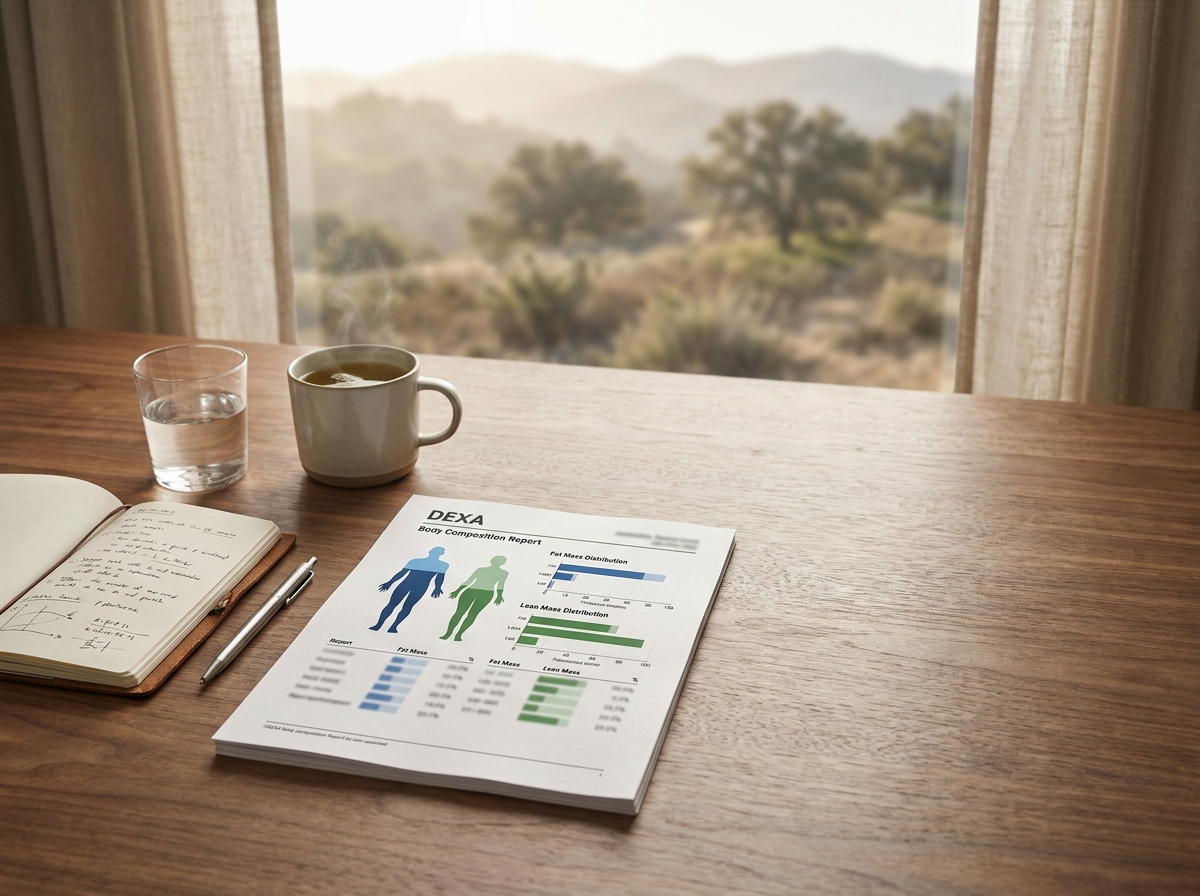
Where appropriate, tools like DEXA body composition scanning provide a more complete picture — tracking changes in body fat, lean mass, and visceral adiposity over time. The purpose isn't to generate more data. It's to understand whether the strategy is actually working, and to catch early if it isn't.
What Progress Actually Looks Like
The weight loss conversation is saturated with promises of fast, dramatic transformation. The reality of meaningful, lasting improvement is less dramatic and more durable: consistent fundamentals applied over time, with a strategy built around the person's actual life.
A patient who is stronger, carries less visceral fat, has better metabolic markers, and feels more capable in daily life is succeeding — even if their progress looks unremarkable on a chart. That outcome, sustained over years, is worth more than any number they had in mind at the start.
